Small changes, done with restraint
Cosmetic dentistry in Johnstown, NY.
Whitening, bonding, veneers, and cosmetic repairs for patients who want their smile to look better without looking overdone. Serving Johnstown, NY and the surrounding Fulton and Montgomery Counties.
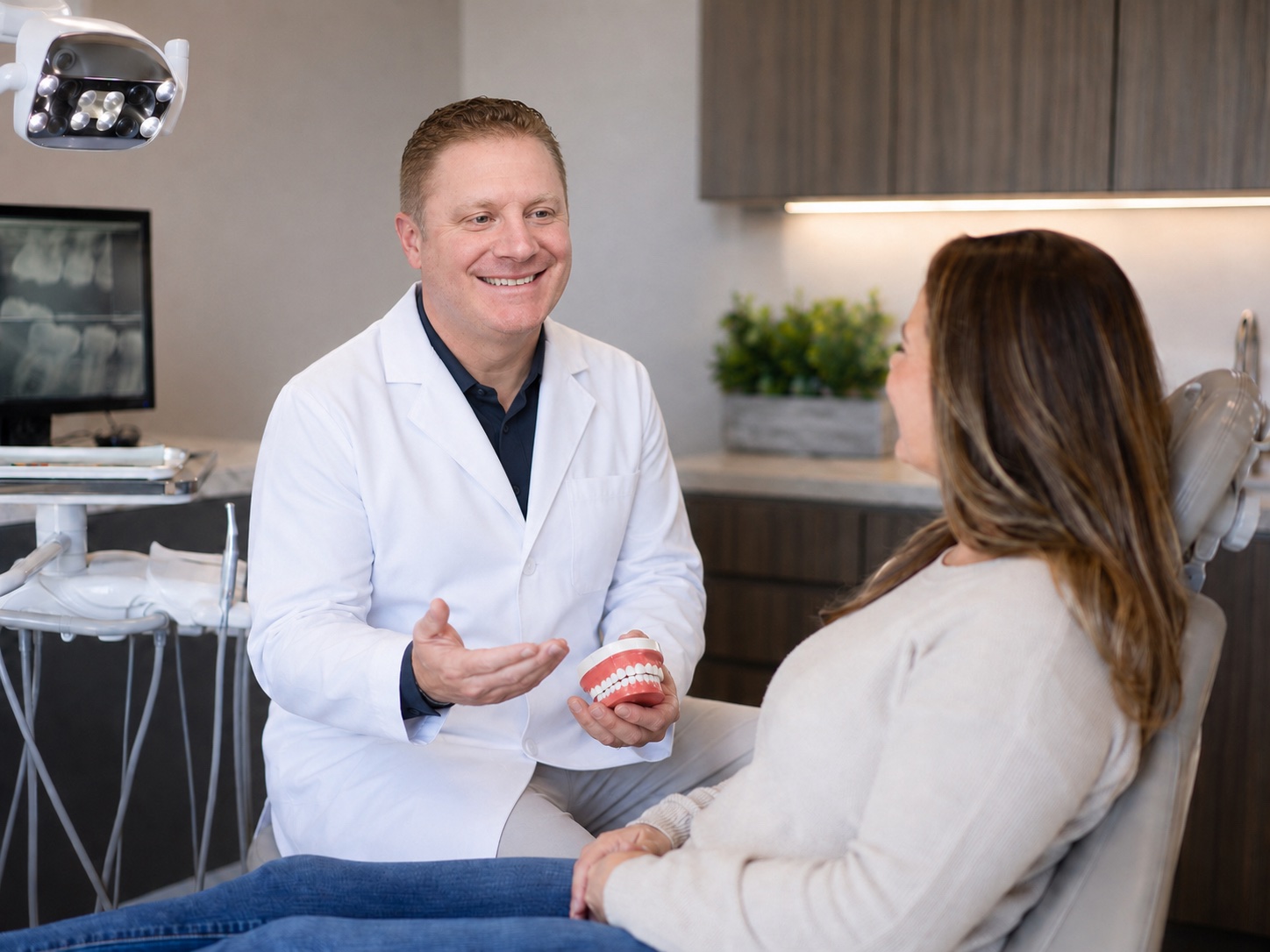
It should still look like you.
We do not pitch makeovers. If a small change is what you want, we do that. If a larger change is right, we explain it, once, and you decide.
Patient-led, never pushed
What patients usually ask for
Common cosmetic conversations.
Most cosmetic visits start with one of four asks. The right answer is usually simpler than people expect.
Whiter teeth, without the gimmicks
In-office whitening or take-home trays, both with their own trade-offs on time, sensitivity, and cost. Candidacy depends on tooth structure and the presence of restorations in the smile line.
A small chip or imperfection
Composite bonding can repair chips, smooth small edges, or refine the look of a single tooth. Case-dependent service life; refresh or replacement may be needed over the years.
Even, natural-looking front teeth
Veneers are the most invasive cosmetic option. They involve permanent preparation of the tooth surface, which is not reversible. Discussed only when smaller changes cannot achieve the goal.
A smile that just looks tired
Sometimes the honest answer is a thorough cleaning and a re-evaluation of bite, not cosmetic work at all. We say so when that is the case.
What cosmetic dentistry includes
It should still look like you.
We do not pitch makeovers. We listen to what you want to change, explain the simplest realistic options, and start with the most conservative path that can get the result you want.
In-office whitening
A single appointment with a stronger gel and isolation of the gums.
Take-home whitening trays
Custom-fit trays worn over a week or two. Sensitivity response varies by patient.
Composite bonding
Tooth-colored material added to fix chips, gaps, or short teeth. Less invasive than veneers when the goal can be met with bonding.
Veneers
Thin porcelain or composite facings on the front of teeth. Involve permanent preparation of the tooth surface.
Tooth contouring
Subtle reshaping of the edges of teeth. Anesthetic use depends on the case.
Cosmetic crowns
When a structurally compromised tooth also needs to look better, a crown can address both.
What to expect
A conversation before any change.
Cosmetic decisions get made carefully because they are harder to undo. The pace at Dunning is slow on purpose.
-
1
Call the office
Tell us what you would like to change and when you are hoping to have it done. The front desk will schedule the right visit type.
-
2
Quiet consultation
Dr. D'Addio looks at what you have, listens to what you want, and explains the realistic options, including doing nothing.
-
3
Plan, then begin
Once you decide what to do, the number of appointments and the sequencing depend on what you chose. The plan lays it out before any work starts.
Insurance and cost
Using your benefits out of network.
Dunning is a fee-for-service practice. That does not mean you cannot use dental benefits here. Many patients do. You pay the practice at the visit, we submit the claim to most carriers as a courtesy, and your insurer sends reimbursement directly to you. Card, check, cash, HSA and FSA cards, and CareCredit are accepted. Medicaid and Fidelis are not.
See how insurance works hereYour plan, looked up first
Before work beyond a basic exam or cleaning, the front desk checks your plan and gives you a written estimate.
Claims filed as a courtesy
We submit the claim for you. Your insurer applies your plan's rules and makes the final benefit determination.
Common questions
Questions about cosmetic dentistry?
Will whitening damage my teeth?
How long does whitening last?
Are veneers reversible?
Who is a candidate for whitening, bonding, or veneers?
I just want a tooth that does not bother me anymore. Do I need cosmetic work?
What if I do not like the result?
Do you offer Invisalign or braces?
Will insurance cover cosmetic work?
Related services
Other paths from the same chair.
Cosmetic work usually pairs with, or follows, other dental care.
Keep reading
Patient guides on this topic.
Whitening, bonding, or veneers?
The three most common cosmetic options, how they compare, and how to choose the least invasive treatment that can plausibly achieve your goal.
Patient guideProfessional whitening vs. drugstore strips
An honest comparison of professional and over-the-counter whitening, written by a dentist who recommends both, for the right patients.
Ready to ask the question quietly?
A short phone call keeps the conversation private and helps the front desk match you with the right visit type.
Honest dentistry for families who want the long view.