Dental resources · Emergency
Lost crown or broken tooth?
Some dental problems can wait until Monday. A few cannot. Here is how to tell which is which, and what to do in the hours before you can be seen.
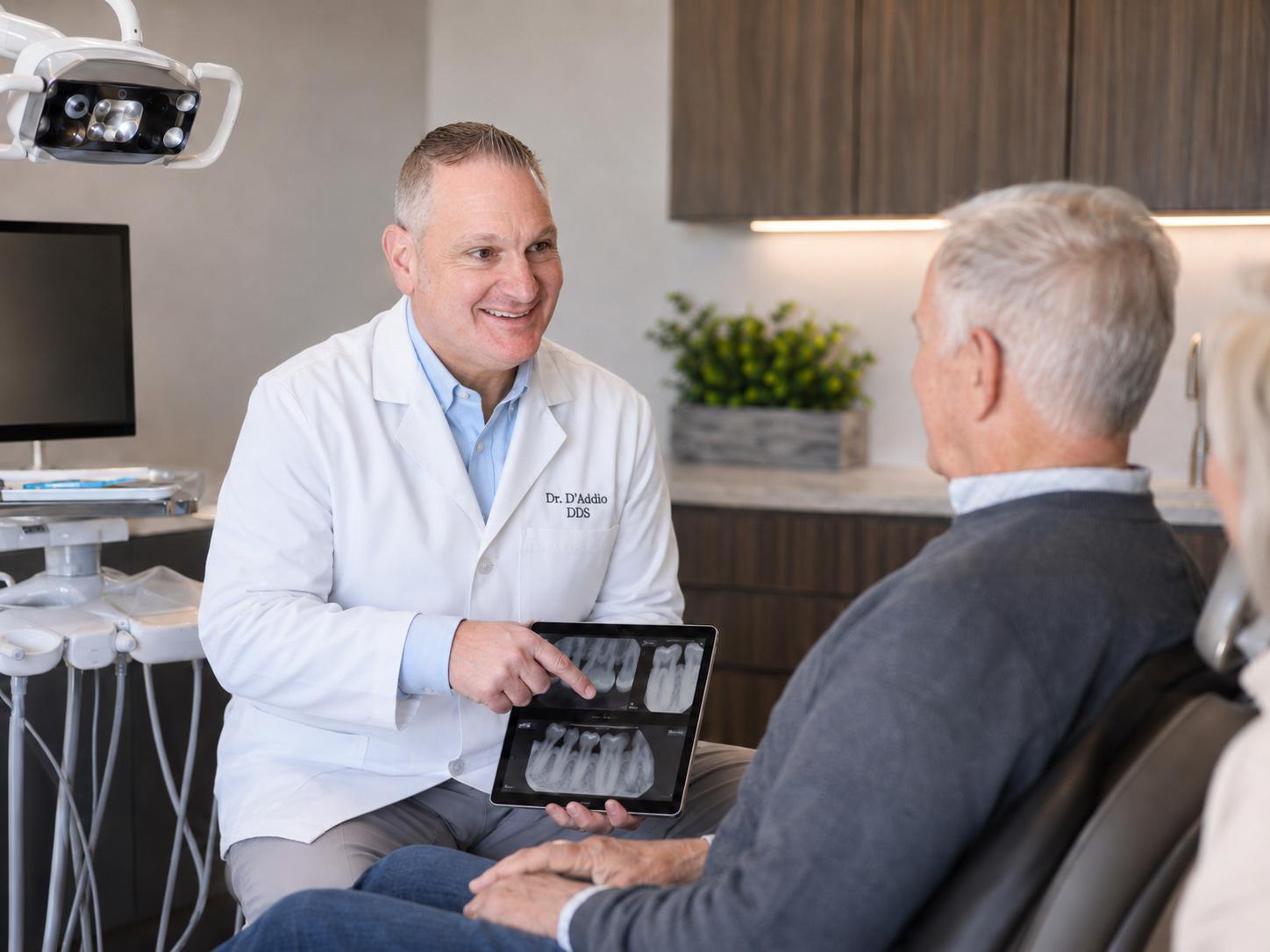
Reviewed by Dr. Anthony J. D'Addio, DMD
Aligned with the American Dental Association's dental emergency guidance. Call first, and go to the emergency department for anything involving difficulty breathing, uncontrolled bleeding, or serious facial trauma.
5 min read
Signs you need the ER first.
- Difficulty breathing or swallowing.
- Uncontrolled bleeding.
- Severe facial swelling, especially near the eye or extending down the neck.
- Trauma involving more than just teeth (jaw, head, or loss of consciousness).
Those situations are for the emergency department or 911, not for a dental office. Once the immediate risk is addressed, the follow-up dental work happens after.
For a lost crown.
A crown that comes off is rarely an emergency, but it is worth handling promptly so the underlying tooth is not left exposed for weeks.
- Save the crown. Rinse it and put it somewhere you will not lose it. In most cases the same crown can be recemented.
- Do not force it back on yourself. Trying to seat a crown at home can shift it into the wrong position and can damage the underlying tooth.
- Call the office to schedule. Recementation is usually a short visit.
- Chew on the other side until the crown is back in place. The underlying tooth is more fragile without the crown covering it.
See the Dental Crowns page for more on crown work.
For a broken tooth.
A broken tooth is a spectrum. A small chip that is not painful is different from a large fracture that hurts to breathe on.
- If there is a broken piece, save it in a small container. Sometimes it can be bonded back.
- Rinse gently with warm water.
- If there is bleeding from the gum, apply light pressure with clean gauze.
- Cold sensitivity is common. Chew on the other side.
- Call the office. A visual exam decides whether the repair is a filling, a crown, or something else.
See the Restorative Dentistry page for more on repair options.
For a knocked-out permanent tooth.
The ADA guidance for a knocked-out permanent tooth is time-sensitive.
- Pick the tooth up by the crown, not the root.
- If it is dirty, rinse gently with water. Do not scrub.
- If possible, place the tooth back in its socket and hold it in place with light finger pressure or by biting on clean gauze.
- If it cannot be placed back, keep it in milk or in saliva (in the cheek or in a container). Do not use tap water for storage.
- Call the dentist immediately. Time is the critical variable for saving the tooth.
This applies to permanent teeth. Do not attempt to reinsert a baby tooth; it can damage the developing permanent tooth beneath. Call the office or a pediatric dentist for guidance.
For swelling.
Facial swelling is the situation that most often needs to be seen promptly. Small, contained swelling around a specific tooth can usually be triaged by phone. Larger swelling, especially with warmth, redness, or fever, needs same-day attention.
Swelling that extends past the jawline, involves the eye area, or affects breathing or swallowing is an emergency department situation, not a dental office one.
Between now and being seen, cool compresses on the outside of the face can help. Warm compresses can make the situation worse and are not recommended without a dentist's guidance.
What to say when you call.
The front desk asks a small set of questions to triage:
- What happened, and when.
- Whether there is pain, and how severe (a scale of 1 to 10 helps).
- Whether there is swelling, and where.
- Whether you have taken anything for it, and whether it helped.
- Any medical conditions or medications that matter.
That short conversation decides whether you should come in that day, whether you need the emergency department, or whether the situation can safely wait for the next available appointment.
Common questions
Practical answers, plainly written.
Should I use over-the-counter dental cement to re-glue a crown?
Home dental cement can hold a crown temporarily until you are seen. It is not a substitute for a professional recementation. Do not force the crown onto the tooth; if it does not seat easily, leave it off and call the office.
Can I take pain medication before the appointment?
Yes, standard over-the-counter pain relievers used as directed on the label are generally appropriate. Mention what you have taken when you call so the office knows what you have already tried.
How quickly can Dunning see an emergency?
The office triages every call and works to see urgent dental concerns at the earliest appropriate opening. Actual timing depends on the situation and the schedule that day. If the concern cannot safely wait, the front desk will make that clear.
What if this happens after hours?
For anything involving difficulty breathing, uncontrolled bleeding, severe facial swelling, or trauma involving more than just teeth, go to the emergency department. For a lost crown or a small chip that is not painful, home care until the next business day is usually fine. Call the office when it opens.
Does insurance cover emergency visits?
Emergency exam codes are typically covered under most dental plans, though the specific reimbursement depends on the plan. Dunning is out of network and submits claims as a courtesy; the <a href="/insurance-and-payment/">Insurance and Payment</a> page walks through the flow.
When it matters, call first.
Dunning triages urgent dental concerns by phone during office hours. If it is after hours and it is serious, the emergency department is the right first stop.
Honest dentistry for families who want the long view.