Skip to content

Services · Restorative · Bridges

Dental bridges in Johnstown, NY.

When a tooth is missing and the neighboring teeth are healthy enough to support the load, a fixed bridge restores function and appearance in two visits. We use bridges when they're a better fit than implants, and explain honestly when an implant restoration is the longer-lasting option.
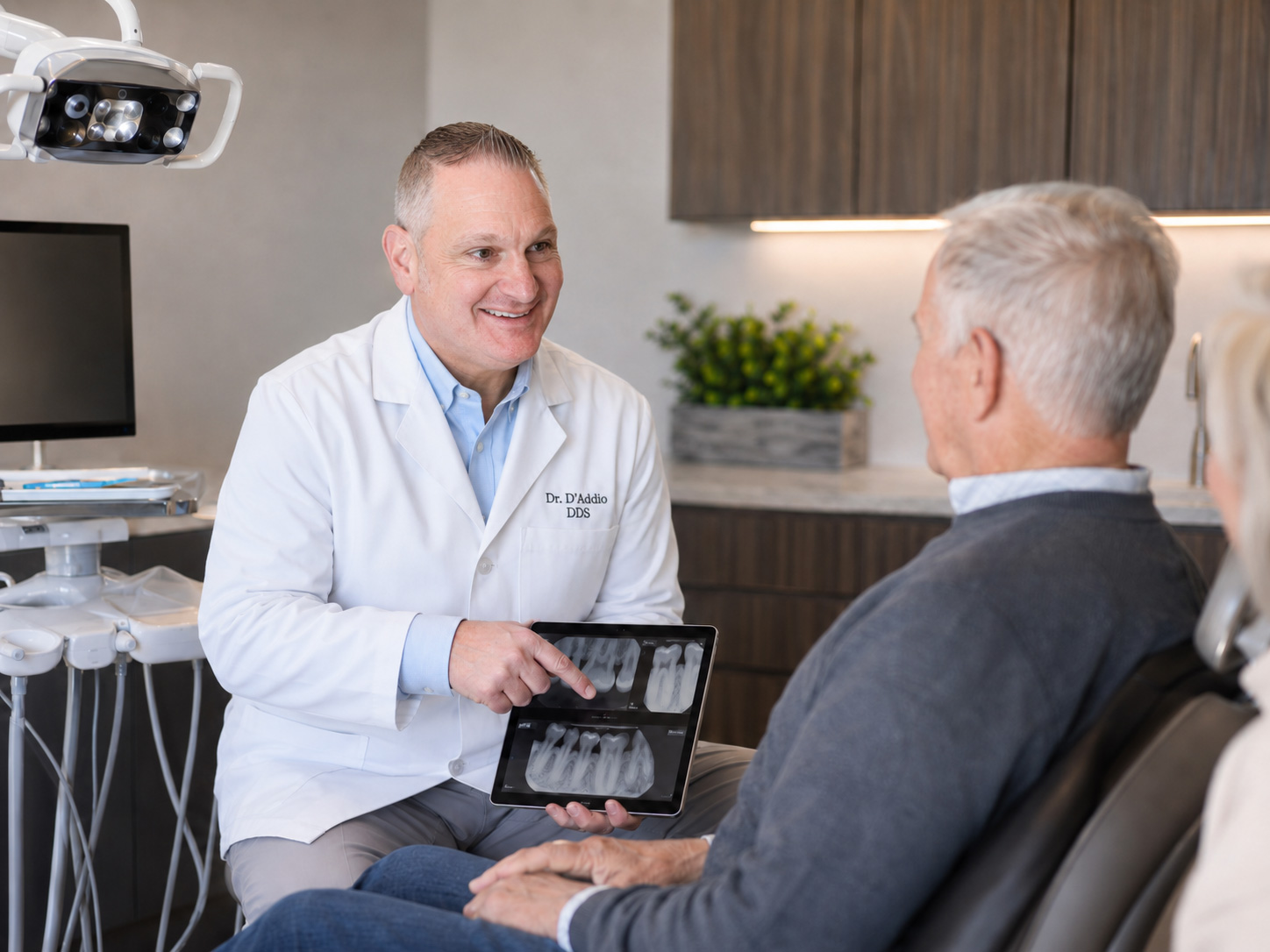
Dr. D'Addio reviewing X-rays to plan a dental bridge at Dunning Family Dental in Johnstown, NY.

Fixed in place. Made by a lab. Built to last.

A bridge is anchored to crowns on the teeth on either side of the gap, so it stays put, looks natural, and lets you chew normally without removing anything at night.

Two visits · 2–3 weeks apart

When a bridge is the right answer

Four common bridge situations.

We typically recommend a bridge in one of these scenarios, and we'll talk through the alternatives (implant restoration, partial denture) honestly before anyone agrees to anything.

One missing tooth, with healthy neighbors

If the teeth on either side of the gap already have large fillings or could benefit from crowns, a bridge solves two problems at once, replacing the missing tooth and reinforcing the neighbors.

An implant isn't a candidate

Some patients have bone loss, medical conditions, or budget constraints that make implant placement impractical. A bridge is often the next-best fixed solution.

Two adjacent teeth are missing

A three- or four-unit bridge can span two missing teeth as long as the anchor teeth on either side are strong enough to carry the extra load.

An old bridge has failed

Bridges typically last 10–15 years. When one fails, we evaluate whether to replace with a new bridge, switch to an implant-supported restoration, or take a different path.

What's included

Two visits to a fully restored bite.

Like crowns, bridges are made by a trusted dental lab between appointments, the precision matters more than the speed.

Bridge candidacy review

We confirm a bridge is the right call vs an implant restoration, partial denture, or leaving the space alone. Honest trade-offs first.

Anchor-tooth preparation

The teeth on either side of the gap are shaped to receive crowns. Local anesthetic, careful contouring, digital impressions.

Temporary bridge

You leave with a temporary bridge protecting the anchor teeth and filling the gap. Wear it normally for the 2–3 weeks the lab takes.

Lab-fabricated final

Porcelain or zirconia bridge made to fit your bite, color, and contours exactly. Cemented at the second visit, bite verified, polished.

Cleaning instructions

Bridges need slightly different home care than natural teeth, floss threaders or water flossers reach under the false tooth. We show you the technique.

Long-term watch

Your hygienist watches the bridge margin and anchor-tooth health at every cleaning. Bridges that get cleaned well last decades.

What to expect

Two visits, three weeks apart.

Same cadence as a crown, just covering more teeth.

  1. 1

    Visit 1: Prep

    About 75–90 minutes. Numbing, anchor tooth shaping, digital impressions, temporary bridge placement, bite check.

  2. 2

    Lab time

    Two to three weeks of fabrication. The temporary protects the prepared teeth in the meantime, chew on the other side for tough foods.

  3. 3

    Visit 2: Place

    About 45–60 minutes. Temporary off, final bridge tried in, fit and bite verified, cemented, polished. You leave able to eat normally.

Common bridge questions

Practical answers, plainly written.

Should I get a bridge or an implant?
Honest answer: it depends on your specific situation, and we'll walk through it before any decision. An implant restoration is usually longer-lasting (often a lifetime for the implant itself, 15–20+ years for the crown on top) and doesn't require altering the neighboring teeth. A bridge can be placed faster (2 visits over 3 weeks vs 4–8 months for an implant), often costs less upfront, and works well when the neighboring teeth already need crowns anyway. The downsides of a bridge: it shortens the lifespan of the anchor teeth, and bridges typically need to be replaced after 10–15 years. We talk through your specific bone, medical history, timeline, and budget before recommending one path over the other. Call (518) 842-3220 to schedule a planning visit.
How much does a dental bridge cost in Johnstown?
A three-unit bridge (two crowns plus a connecting false tooth) is priced based on the materials chosen and the complexity of the anchor teeth, typically two-and-a-half to three times the cost of a single crown. Net cost after insurance reimbursement often lands comparable to in-network practices once the practice fee structure is accounted for. Most patients use CareCredit for spreading the patient-responsible portion across months. For the full billing picture, including which plans we can and can't bill, see the insurance and payment page; the front desk also gives you a written estimate before treatment begins so there are no surprises.
How long does a dental bridge last?
Most bridges last 10 to 15 years on average. Many at Dunning have been in service well past 20 years when the anchor teeth stay healthy and the patient maintains good hygiene around the bridge. The most common reason for bridge replacement is decay developing on the anchor teeth (because they're harder to clean than natural teeth and you can't floss through them normally) or the cement seal breaking down at the margins. We watch both at every routine cleaning. When a bridge does need replacement, we evaluate whether to make a new bridge, switch to implant-supported restorations, or take a different path based on the current state of the anchor teeth. Daily flossing under the bridge, using floss threaders or a water flosser, extends bridge life significantly.
Will my insurance cover a bridge?
Most dental plans cover a portion of a fixed bridge at the major-restoration tier, often 50% after the deductible, up to the annual maximum. Coverage varies considerably by plan and sometimes by tooth position; front-of-mouth bridges may be reimbursed differently from back-of-mouth ones. The front desk reviews your plan before treatment and provides a written estimate showing both the practice fee and the expected reimbursement. The full insurance posture, accepted plans, and CareCredit financing details all live on the insurance and payment page.
Will a bridge look natural?
Yes, when properly designed and color-matched. Modern porcelain and zirconia bridges are shaded to match your surrounding teeth, contoured to look like they belong, and finished so they reflect light naturally. Most people who see a well-made bridge can't tell which tooth is the false one without being told. The anchor crowns and the bridge tooth are made as one piece by the dental lab using the same color and material throughout. We use a shade guide to match your existing teeth at the preparation visit, and you can preview the bridge shape and color during the temporary phase before the final is cemented. If something doesn't look right, we discuss it before final placement, it's easier to adjust beforehand than after.
How do I clean a dental bridge?
Brushing the bridge is the same as brushing natural teeth, twice a day, gentle pressure, fluoride toothpaste. The difference is flossing: regular floss can't pass between the connected teeth of a bridge. You need floss threaders (thin plastic loops that pull floss under the false tooth) or a water flosser (a device that uses pressurized water to clean under the bridge). Your hygienist will show you the technique at the cementation visit and at every subsequent cleaning. Skipping this step is the #1 reason bridges fail early, food and plaque accumulate under the false tooth, eventually causing decay on the anchor teeth or gum disease around the bridge. Five minutes a day extends bridge life by years.

Bridge or implant, which is right for you?

Call (518) 842-3220 and we'll talk through your specific situation. The right answer depends on more than just cost.

Dunning Family Dental 310 Jansen Avenue Johnstown, NY 12095 (518) 842-3220

A legacy of family dentistry you can trust.

518-842-3220 Call now