Services · Cosmetic · Teeth whitening
Teeth whitening in Johnstown, NY.
Two routes, a single in-office appointment for the fastest visible result, or custom take-home trays for a gentler, gradual lift. Either way, professionally supervised whitening is significantly safer and more effective than over-the-counter strips or gels.
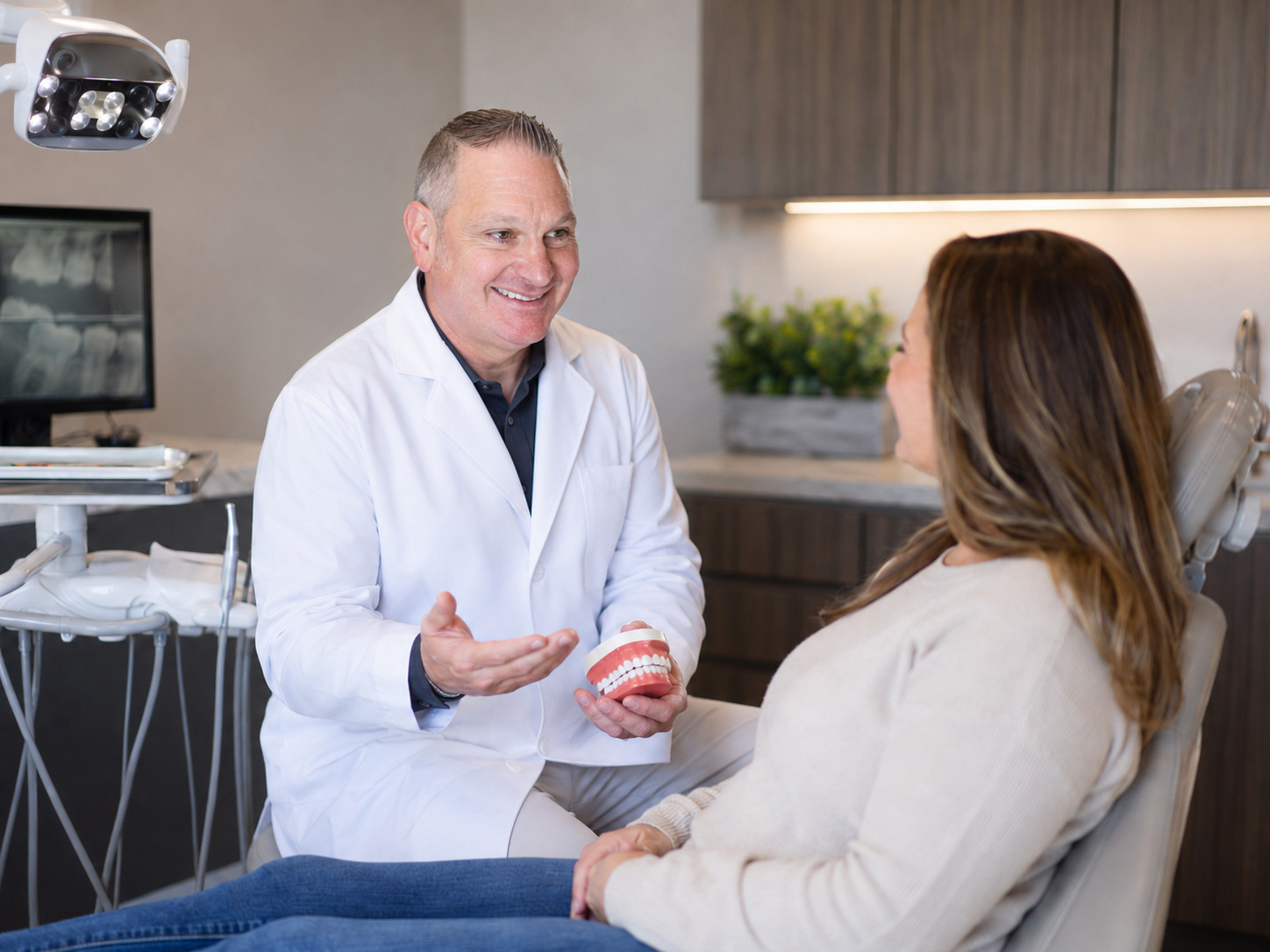
Honest about what whitening can, and can't, do.
Whitening lifts natural surface staining well. It does not change crowns, fillings, or veneers, and it has limits on intrinsic staining. We'll tell you what to realistically expect before you start.
In-office or take-home
When patients ask about whitening
The reasons patients ask about whitening.
Almost every whitening conversation begins with one of these. The right approach depends on your starting shade, the timing you're working with, and any existing dental work that would need to match.
Coffee, tea, or red wine staining
External staining from drinks, foods, and tobacco responds well to professional whitening. Most patients see 3–8 shades of improvement with either in-office or take-home treatment.
A wedding, reunion, or event coming up
If you have a specific date in mind, the in-office treatment lifts your shade in a single appointment. Plan it 1–2 weeks ahead of the event so the color settles in.
Take-home preferred for sensitivity
Patients prone to sensitivity often do better with custom take-home trays used over 7–14 days. The gentler concentration gives the teeth and gums time to adjust.
Maintenance after past whitening
Existing whitening fades over 6 months to 2 years depending on diet and habits. Custom trays from a previous whitening can be re-used for maintenance with fresh gel.
What we offer
Two professionally supervised options.
Both routes use clinically tested whitening agents at concentrations not available over the counter, and both are supervised by Dr. D'Addio for safety.
Honest pre-whitening exam
We confirm your teeth and gums are healthy enough for whitening, identify any existing dental work that won't change color, and set realistic expectations.
In-office whitening
A single 60–90 minute appointment using a stronger gel and gum isolation. Fastest visible result; most dramatic in one session.
Custom take-home trays
Trays made from impressions of your teeth, plus professional-strength gel. Wear 30–60 minutes a day for 1–2 weeks. Gentler on sensitivity.
Combined approach
Some patients start with in-office for a fast lift and use take-home trays to maintain or push the shade further. We discuss whether this makes sense for your goals.
Sensitivity management
Desensitizing toothpaste before treatment, lower-concentration gel options, and shorter wear times for sensitive teeth. Most sensitivity resolves within days of finishing.
Maintenance plan
After whitening, simple habits (rinse after coffee, regular cleanings, occasional touch-ups with trays) keep results bright for 1–2 years.
What to expect
Two visits for in-office. One visit for take-home setup.
Either path is straightforward. The right pick depends on your timeline and your sensitivity.
-
1
Consultation
About 30 minutes. Dr. D'Addio reviews your teeth, sets realistic shade expectations, and recommends in-office vs take-home based on your situation. We can often whiten the same week.
-
2
Treatment
In-office: 60–90 minute appointment with gum isolation and high-concentration gel. Take-home: 1–2 weeks of daily 30–60 minute tray wear at home, on your schedule.
-
3
Result + maintenance
Final shade visible within a day or two of finishing. Sensitivity (if any) resolves within a week. Touch-up trays maintain the result for years; we keep your tray molds on file.
Common whitening questions
Practical answers, plainly written.
How much does professional teeth whitening cost in Johnstown?
Does teeth whitening damage your teeth?
How long do teeth whitening results last?
Will whitening work on crowns, veneers, or fillings?
Can over-the-counter whitening work as well as professional?
Is in-office or take-home whitening better?
Related services
Other cosmetic options.
Cosmetic dentistry overview
Bonding, contouring, and other quiet improvements.
General & preventive
Routine cleanings remove surface staining and keep results fresh.
Restorative dentistry
If existing dental work doesn't match newly whitened teeth, restorative replacement can be planned around the new shade.
Ready to brighten your smile?
Call (518) 842-3220 and we'll set up a consultation. No commitment, just an honest read of what whitening can do for your specific teeth.
A legacy of family dentistry you can trust.